





Children’s Environmental Health Post-Disaster Assessment Process
Disasters and emergencies can be very stressful for children and their families. They may damage the places where children live, learn, play, and pray. Disaster impacts on these places can increase stress for children and harm their health, safety, and support networks. Identifying issues that may affect children during and after a disaster requires organizations to anticipate environmental health and safety risks before they arise. It also requires thinking ahead about protective steps that can be taken through emergency planning to support children's health and safety.
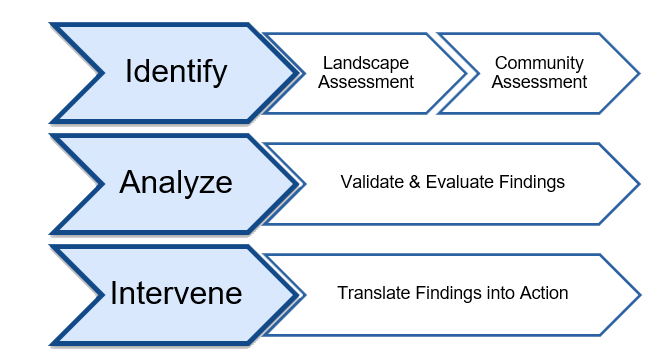
Identify
The Identify phase consists of two main activities. The Landscape Assessment uses data that can be gathered via open source or government databases and should be completed as the first step in the process because it informs planning for future steps. The Community Assessment is designed to engage community child-serving organizations to identify actual gaps, concerns, needs, and challenges related to children's environmental health. These engagements typically happen in person, at the places where children receive services, when possible.
Analyze
During the Analyze phase, the team reviews what was learned during the Identify phase and carefully validates and evaluates the data. The findings are incorporated into an Issue Report that highlights the concerns that matter most to the community and those that could have the biggest impact on long-term recovery.
Intervene
The Intervene phase begins when the Issue Report is delivered to the state, tribal, or territorial recovery lead, or to the federal Health, Education, and Human Services (HEHS) Recovery Coordinator. While this guidance primarily focuses on the assessment process covered in the Identify and Analyze phases, it also includes some information about the Intervene phase to provide helpful context.
Back Next